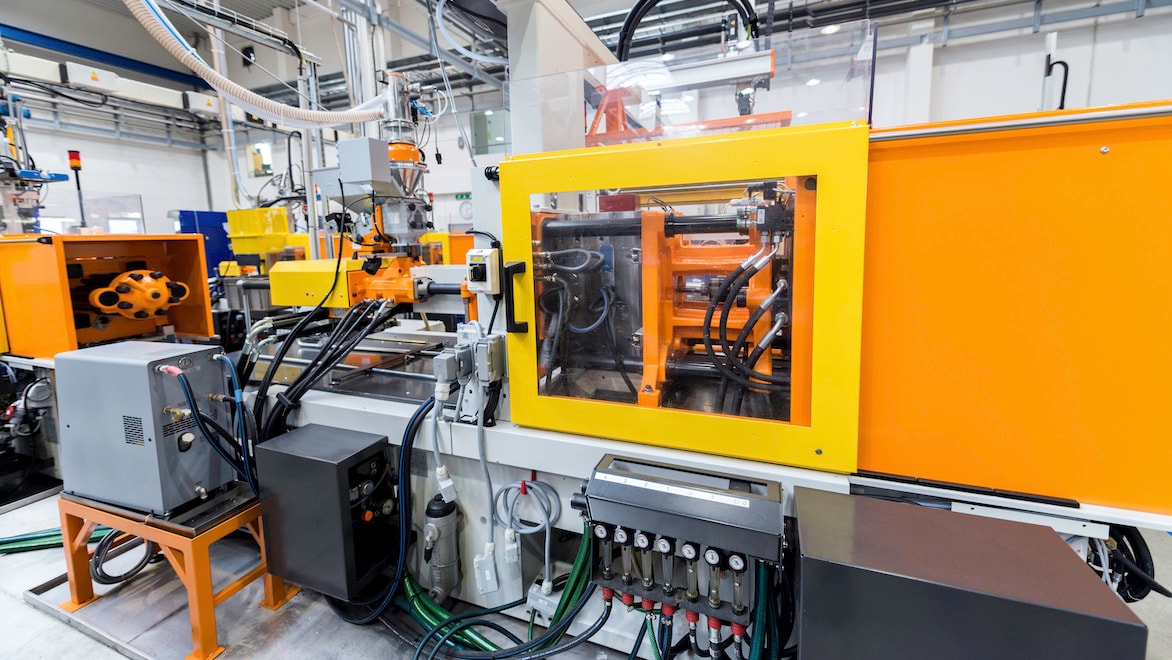
Injection molding is a method for manufacturing high-volume parts with plastic materials. Due to its reliability and flexibility in design options, plastic injection molding is used in many industries, including packaging, consumer electronics, automotive, medical, and many more. Injection molding is typically for manufacturing plastic products using thermoplastic or thermoset polymers but is also used in some metal injection molding applications.
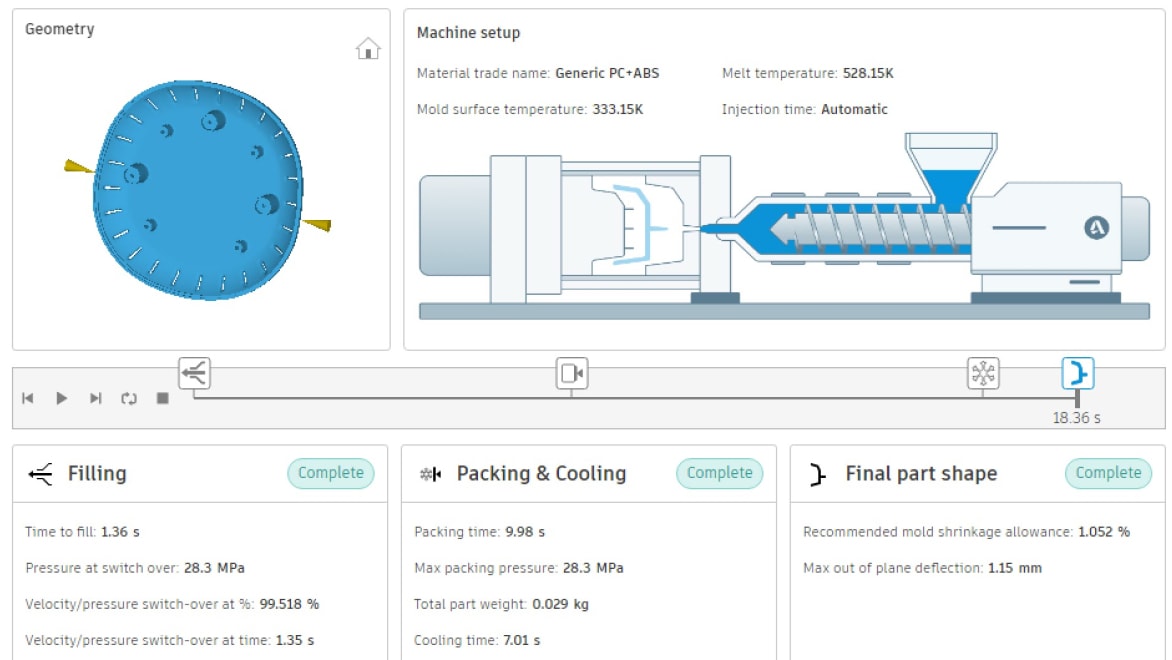
The plastic injection molding process uses a machine divided into clamping and injection units. A metal mold containing a cavity matching the desired part’s geometry is clamped into place on the machine. Next, the injection unit melts plastic pellets and injects the molten plastic into the mold at a very high pressure. Depending on the features of the part and the type of plastic, there may be a holding period when the plastic-filled cavity is held under pressure to ensure that it forms correctly.
The mold has cooling channels that help uniformly cool the material. During the cooling period, pressure is released to help with cooling. Finally, the clamping unit is released and mechanisms eject the part from the mold, triggering the process to then repeat. Injection molded parts may need additional finishing steps, such as removing molding aids like plastic sprues or runners, polishing, or assembly to other components.
Autodesk’s Moldflow analysis software can help you get the most out of the process and achieve the best results through plastic injection simulation.
The traditional plastic injection molding process can be modified to include processes that help to enhance part quality and part design flexibility.
Molding with thermoset materials requires heat or chemical means to cure the material. It uses a similar process as thermoplastic injection molding but may have a hot mold instead of cold one. It may also require a cure time instead of cool time, with the mold closed.
Overmolding is a plastic injection molding process where one material is molded on top of another. This includes molding over part inserts (such as a metal thread). An example of this is a hard plastic part that has a softer (or rubberlike) component—think of a hairbrush or battery-powered drill with a soft handle.
After injecting plastic into the mold cavity so it only fills a portion of the cavity, an inert gas is introduced, at high pressure, which results in an air pocket in the center of the part. This reduces part weight while achieving a high-quality surface finish.
This process involves the injection of two different materials using either the same or different injection locations. One use case for this is a product with a stiffer material as a base and a softer, more flexible material on the exterior to withstand a wider range of performance applications.
In this process, a physical blowing agent, chemical blowing agent (CBA), or mold core-back process is used to trigger the foaming of the polymer inside the mold. This is a way to reduce the weight of parts while keeping the structural integrity of the part—thus, it is often used in automotive components.
This forming technique is for producing small components using powders, typically ceramics (CIM) or metals (MIM), and binding agents, typically polymers. The material follows a similar process as traditional injection molding.

Plastic injection molding manufactures high quantities of parts faster than other manufacturing methods like machining or 3D printing. High accuracy and automated processes result in identical part creation, promoting low labor costs. Customization allows flexibility in part design (for example, molded-in inserts) and material properties (such as color, clarity, strength, and flexibility).
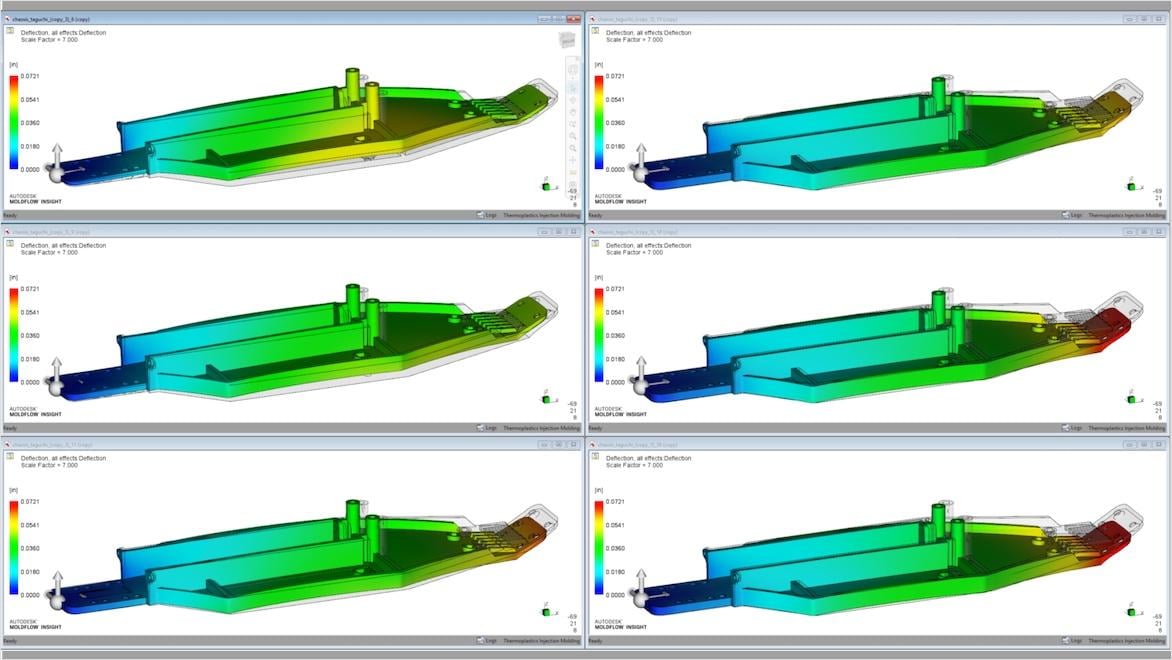
Part designers, mold engineers, and other manufacturing stakeholders run into different challenges with plastic injection molding, which ultimately affect part quality if they are not caught in the early design stages. The upfront investment in injection mold tooling can be thousands to hundreds of thousands of dollars, which means extra care is needed to prevent having to adjust or rebuild molds.
Some examples of molding and process challenges include material variations, weld lines, sink marks, warpages, long cycle times, and incomplete cavity filling. By using plastic injection molding simulation software such as Autodesk Moldflow or Autodesk Fusion Simulation Extension, you can eliminate many of these challenges before they become problems.

Autodesk’s Moldflow Insight software features an application programming interface (API) that will allow automation for many everyday operations and tasks. You can save time and take the hassle out of plastic injection simulation with custom report generators, macros, and more.v